
We walk into a kitchen, we smell the aroma of sauce simmering on the stove, and an almost automatic mental association kicks in: genuine, healthy, safe. On the other hand, standing in front of a supermarket shelf, facing boxes, jars and sealed packages, our thoughts often run to the opposite concepts: artificial, chemical, low quality.
This sharp contrast between homemade preparations and packaged foods has become one of the pillars of our eating habits and deeply influences consumer perception, especially in light of the dictates of “diet culture.” But are we really sure that the dividing line between what is good for us and what is bad for us coincides exactly with the walls of our kitchen?
In this article, we will question this pairing and try to understand why the distinction between “homemade” and “industrial” is partial and, at times, even misleading for those trying to follow a balanced diet.
1. Is a homemade food always better than a packaged one?
Spoiler: no. The “homemade” origin of a dish guarantees control over the ingredients, but it does not automatically ensure nutritional superiority or hygienic safety.
The nutritional factor
When we make a dessert at home, for example a margherita cake or biscuits, we tend to consider them “healthy” because they don’t contain the preservatives typical of industrial products. However, from the point of view of nutritional quality, a homemade cake made with butter, white sugar and refined flour has exactly the same impact on metabolism as a similar product bought at the supermarket. The human body doesn’t recognize whether sucrose comes from a bag of sugar poured by hand or from an industrial silo: it recognizes the molecule. As a result, overindulging in homemade sweets is just as harmful as overindulging in packaged snacks.
The safety factor
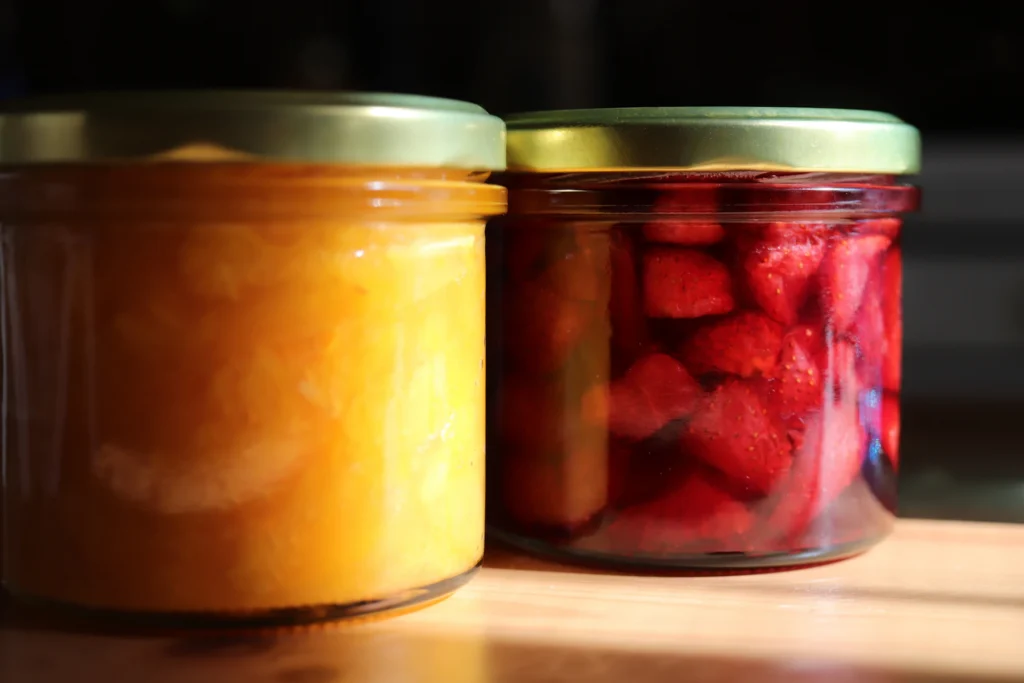
There is also an often underestimated aspect: food safety. Industries are subject to extremely rigorous controls, precise hygiene standards and controlled thermal processes. At home, on the other hand, the risks of cross-contamination (for example, using the same knife for different foods), failure to respect the cold chain, or uneven cooking are decidedly more frequent. Consider homemade preserves: if not prepared according to the strict guidelines of the Ministry of Health, they expose us to the very serious risk of botulism, a danger that industry significantly reduces thanks to standardized sterilization processes.
2. Is an industrial product always a worse choice?
Absolutely not. The term “industrial” defines the production method, not the intrinsic value of the food. There are excellent industrial products that make healthy eating easier.
Industrial processing is not an absolute evil. In fact, historically it was born to protect food from spoiling and make it available on a large scale. Today, food technology allows us to have access to ready-made or partially prepared foods of very high quality.
Let’s consider some practical examples of packaged products that are allies of health:
– Canned legumes: Already-cooked chickpeas, beans and lentils generally contain only the base ingredient, water and salt. They are nutritionally excellent and allow those with little time for long soaking and home cooking to still consume plant-based proteins.
– Frozen vegetables: Vegetables are often frozen just a few hours after harvesting, preserving vitamins and minerals better than a “fresh” vegetable that has traveled for days and sat on a market stall for a week.
Labeling these products as “worse choices” simply because they are sold in a package means depriving ourselves of essential tools for maintaining a varied and balanced diet amid the frenzy of modern life.
3. Why do we perceive “homemade” as superior?
It’s a psychological, cultural and emotional matter. We associate food cooked by hand with affection, tradition and the concept of “nature,” triggering a favorable cognitive bias.
Consumer perception is strongly influenced by nostalgia marketing and cognitive biases. Home-cooked food evokes the concepts of:
Control: We see what we put in the pot, which gives us the illusion of total safety.
Effort: We tend to place more value on what requires our time and our work.
Tradition: “The way grandma used to make it” evokes positive memories that alter our objective judgment about how healthy a dish is.
The food industry has understood this dynamic and often uses phrases like “just like homemade,” “with traditional ingredients” or “grandma’s recipe” on packaging. These are communication strategies that exploit this emotional weakness of ours to shorten the perceived distance between the factory and the home kitchen.
4. Is it possible to find packaged foods compatible with a balanced diet?
Yes. The key lies in learning to select. Many packaged foods are not only compatible, but advisable for optimizing time and diversifying our diet.
A mindful choice is not based on rejecting the supermarket, but on the ability to discern. Within the broad category of packaged products, we find a clear stratification:
| Product category | Examples | Role in the diet |
|---|---|---|
| Minimally processed | Tofu, tempeh, seitan, portioned frozen vegetables, tomato passata. | Excellent basis for everyday eating. |
| Ultra-processed foods | Veggie burgers, plant-based cold cuts, snack cakes, sugary drinks, salty snacks. | To be limited, as they are often high in calories, salt and low-quality fats. |
As the table shows, the goal is not to ban the barcode, but to shift the center of gravity of our shopping towards minimally processed products, reducing ultra-processed ones. An excellent industrial tomato passata, combined with durum wheat pasta and a drizzle of oil, makes for a healthy, cheap and very quick meal, which has nothing to envy in a fully homemade preparation.
5. What are the real criteria for evaluating food quality, if origin isn’t enough?
To evaluate food quality we need to look at nutrient density, the ingredient list and frequency of consumption, not just the place of production.
If we want to move beyond the “home vs. industry” opposition, we need to adopt more objective parameters. Here are the three key criteria:
- The complexity of the recipe: Whether it’s a homemade or store-bought biscuit, how many ingredients are needed? If we use flour, eggs, oil and sugar to make a dessert, the ideal industrial equivalent should have a similar list. If the list grows longer with hydrolysates, hydrogenated fats, flavor enhancers and numerous additives that aren’t strictly necessary, then quality declines.
- Nutrient density: Does the food provide vitamins, fiber, minerals and high-quality proteins, or does it only supply “empty calories” (that is, lots of energy but no protective elements for the body)? An industrial frozen minestrone has a very high nutrient density; homemade fried potatoes have a high calorie density but low nutritional quality.
- The impact on daily routine: A food is high quality for our life if it also allows us to eat healthily without stress. If the obsession with “homemade” leads us to order a takeaway pizza because we didn’t have time to prepare everything from scratch, then rejecting packaged food has achieved the opposite of the desired effect.
Conclusions: towards making peace with the pantry
The sharp contrast between homemade (good) and industrial (bad) is a simplification that doesn’t capture current reality. The home kitchen can be the place of unbalanced, calorie-dense or hygienically risky preparations; industry, on the other hand, can be an extraordinary ally in providing safe, nutritious and ready-to-use foods, capable of simplifying the management of a balanced diet.
The real turning point lies with the consumer and their ability to make a mindful choice. Ceasing to judge a food by its packaging and starting to evaluate it for its real nutritional value and the level of processing it has undergone (avoiding or reducing ultra-processed foods as much as possible where feasible) is the first step towards smart shopping, free of guilt. The home kitchen remains a wonderful place of culture and sharing, but the supermarket is not the enemy: you just need to know how to choose.
