Between late 2024 and early 2026, four European countries – Italy, Germany, Denmark and the Netherlands – updated their official dietary guidelines, embracing the recommendations of national and international scientific institutions on health and sustainability and expanding the space given to plant-based food sources.
The Netherlands: the most recent reform
On 9 April 2026 the Voedingscentrum (the Dutch nutrition centre) published the new Schijf van Vijf, the “Wheel of Five” that has guided the country’s food choices for decades. It is the first complete revision in ten years, built on the recommendations of the Gezondheidsraad (the Health Council) issued in December 2025.
These guidelines, which also apply to school meals and hospital menus, have literally reshuffled the cards on the table, with numbers that speak for themselves:
- Meat: the weekly ceiling drops from 500 to 300 grams, of which no more than 100 grams of red meat (60% less than the previous guidelines), the rest fish or poultry;
- Cheese: limit halved, from 40 to 20 grams per day;
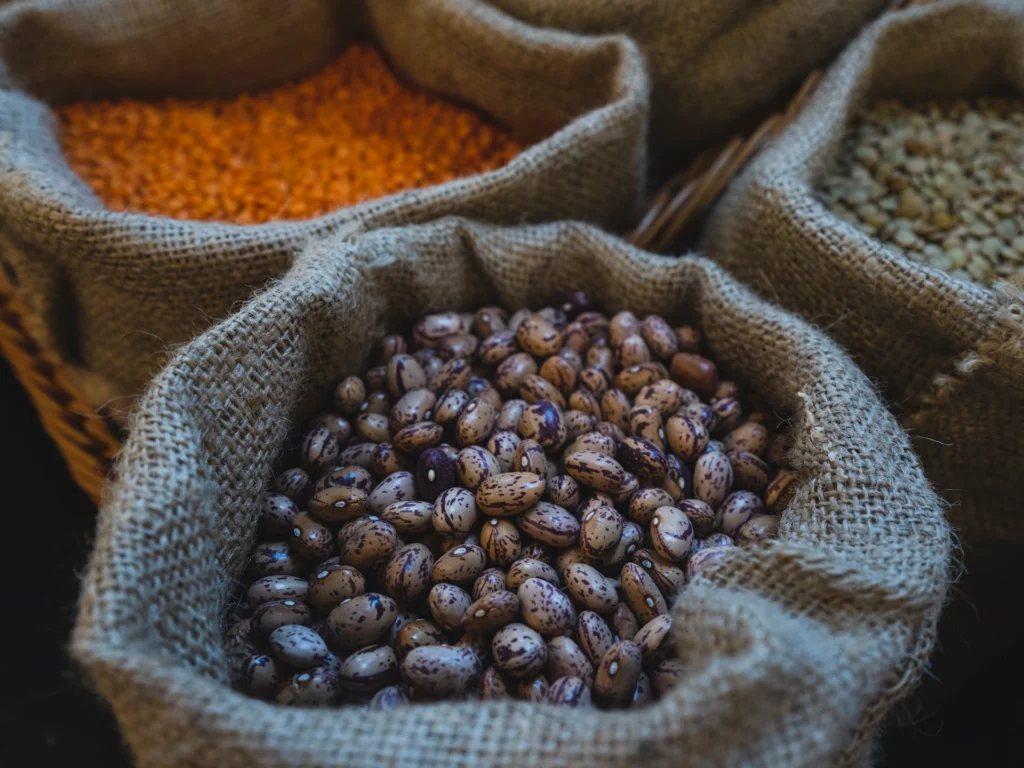
- Legumes: nearly doubled, from 120-180 to 250 grams per week;
- Nuts and seeds: from 25 to 30 grams per day;
- Eggs: at most 4 per week;
- For the first time, alternatives to cow’s milk, such as fortified soy drinks, are officially on the same level as milk itself.
The guiding principle is the 60/40 ratio: 60% of protein must come from plant sources, 40% from animal sources. The document explicitly rests on three equal pillars – health, sustainability and food security – and estimates that this rebalancing could cut the environmental impact of the Dutch diet by around 25%.
Germany: “3/4 plant-based” is the official standard
In March 2024 the Deutsche Gesellschaft für Ernährung (DGE) updated its recommendations using a new mathematical model, able to weigh nutritional needs, consumption habits, health and environmental impact at the same time.
The result: at least 75% of the daily diet should be of plant origin, less than 25% of animal origin. Fruit, vegetables, whole grains and legumes become the heart of the diet recommended to Germans.
Added to this is a historic step: in July 2024 the DGE published a 26-page position paper in which, for the first time, it officially recognises that a well-planned vegan diet can be “health-promoting” for the healthy adult population, provided vitamin B12 is supplemented and the intake of critical nutrients is looked after. The German scientific society also explicitly factors in the positive effects of this choice on the environment.
For a country where the sausage is almost a cultural icon, this is a revolutionary step forward.
Denmark: a pioneer of climate on the plate
Denmark was the first European nation to merge health and climate into a single official document. The guidelines revised in 2021 by the Ministry of Food, Agriculture and Fisheries carry a title that is a programme in itself: “The Official Dietary Guidelines – good for health and climate”.
The short motto distributed to citizens is clear: “eat plant-rich, varied and not too much”. The operational recommendations call for:
- Reducing weekly meat consumption from 500 to 350 grams, with particular attention to limiting beef and lamb because of their high climate impact;
- Eating at least 100 grams of legumes per day (beans, chickpeas, lentils);
- Progressively replacing products of animal origin with plant-based alternatives.
The National Food Institute at the Technical University of Denmark estimates that this transition could cut the CO₂ footprint of the average Danish diet by 20-35%.
Italy: the Mediterranean diet becomes ever more plant-based
In February 2025 the Italian Society of Human Nutrition (SINU) presented the new Food Pyramid, built on the fifth revision of the LARN (Italy’s reference intake levels for nutrients). It is a document that effectively realigns the Mediterranean diet – historically centred above all on plant foods – with its own tradition, after decades in which the consumption of meat, cheese and animal proteins had grown well beyond the historic recommendations.
The new pyramid is organised as follows:
- Daily base. Fruit, vegetables, whole grains and extra-virgin olive oil are the foundation of every meal.
- Weekly, in a place of honour. Legumes, now recommended as a main course to be eaten more frequently, listed as a primary protein source on a par with fish and eggs. White meats (chicken, turkey) should not exceed two portions per week either.
- Apex (occasional consumption). Red meats, cured and processed meats, alongside sweets and refined sugars.
For the first time the LARN explicitly include environmental sustainability among the criteria for nutritional recommendations. A choice that amounts to officially recognising that individual health cannot be separated from the health of the planet, and that places Italy among the most virtuous models in Europe.
What this convergence means
Four different countries, four independent institutions, and yet one shared direction clearly emerges: less meat, less dairy, far more legumes, whole grains at the centre. The reasons are the same: preventing chronic disease, environmental sustainability, and the resilience of public health systems.
For those working in food service, food education or public policy, this convergence has concrete implications:
- Institutional menus (schools, hospitals, company canteens) will be required to meet stricter standards.
- The food industry has a market direction officially backed by health authorities.
- Citizens receive a consistent message, no longer filtered through the advertising of specific supply chains.
The food transition has stopped being a divisive conversation between “carnivores and vegans” and has become common, inclusive ground on which everyone can take steps forward from their own starting point. To begin, it is essential to start cooking more legumes, choosing whole grains and, above all, filling the plate with fruit and vegetables. Things our grandmothers did, after all, out of necessity even before choice.
And if you want to take a small concrete step right now, you can support our “Mense Più Green” (Greener Canteens) campaign by signing the petition.