
The SINU congress and the revision
In June, the National Congress of the Italian Society of Human Nutrition (SINU) was held, during which the fifth revision of the LARN — the reference intake levels for nutrients and energy for the Italian population — was presented.
This revision, which involved 150 experts divided into several working groups, is based on data from five surveys: Moli‐Sani, a project that involved approximately 25,000 residents of Molise to study the environmental and genetic factors underlying cardiovascular diseases, tumours and neurodegenerative disorders; INHES (Italian Nutrition & Health Survey), based on a rigorous scientific approach that involved 13,000 citizens aged 6 and over through telephone interviews to analyse the dietary habits of Italians, identifying changes, persistent traditions and new trends; OEC/HES, a survey conducted by the Cardiovascular Epidemiological Observatory on the health status of the Italian population.
Italian food consumption
The revision takes into account the data collected through the IV SCAI, a study — part of the EU-Menu programme — on food consumption in Italy carried out by the CREA (Council for Agricultural Research and Economics) Food and Nutrition Research Centre, which is involved as a cooperating body pursuant to the founding regulation of EFSA (the European Food Safety Authority).
The IV SCAI collects data on the food consumption of the Italian population using methodologies recommended by EFSA. The survey aims to gather data on food consumption in order to assess energy, nutrients, exposure to chemical substances and the environmental impact of the diet, supporting the development of food policies and guidelines for healthy eating and the prevention of chronic diseases.
Towards a plant-based diet
One of the main novelties is the shift towards a plant-based diet.
As stated in the press release from SINU: «One can speak of a genuine cultural evolution, in that the importance of a more generous inclusion of plant-based protein sources, as opposed to those of animal origin in the diet, has been emphasised, on account of new evidence regarding mortality, but also and above all the sustainability of food production».
In the same month, the German Nutrition Society (DGE) also updated its position on the vegan diet, recognising it as a healthy option for healthy adults (see ProVeg’s comment here).
This new position represents a notable shift from the past, including with regard to children, young people, breastfeeding women and the elderly. Whereas in the past the DGE did not recommend a fully plant-based diet for these groups, its new guidance no longer rules it out a priori.
DGE experts state that a vegan diet is extremely environmentally friendly and outperforms a meat-heavy diet. Indeed, the DGE has included in its assessment not only health aspects, but also animal welfare, social and environmental issues.
These revisions by the leading scientific nutrition societies represent an important signal: the criticisms against plant-based diets, widespread especially in traditional media, can no longer be considered scientifically valid.
What the expert says
We asked Dr Luciana Baroni, founder of the Scientific Society for Vegetarian Nutrition (SSNV), which has been promoting plant-based nutrition as a healthier and more sustainable form of eating for years, what she thinks of this openness towards plant-based diets on the part of the Italian Society of Human Nutrition (SINU).
«SINU has in fact been “open” to plant-based nutrition for about ten years, since the working group on vegetarian nutrition was established — a group I also took part in — and which produced two position papers (which you can find here and here) that have contributed to the growing body of scientific data attributing a leading role to plant-based nutrition in maintaining health.
Since this cannot be disputed, the entire scientific community should finally acknowledge this evidence and practise the profession in accordance with science and conscience.
SINU is moving in this direction».
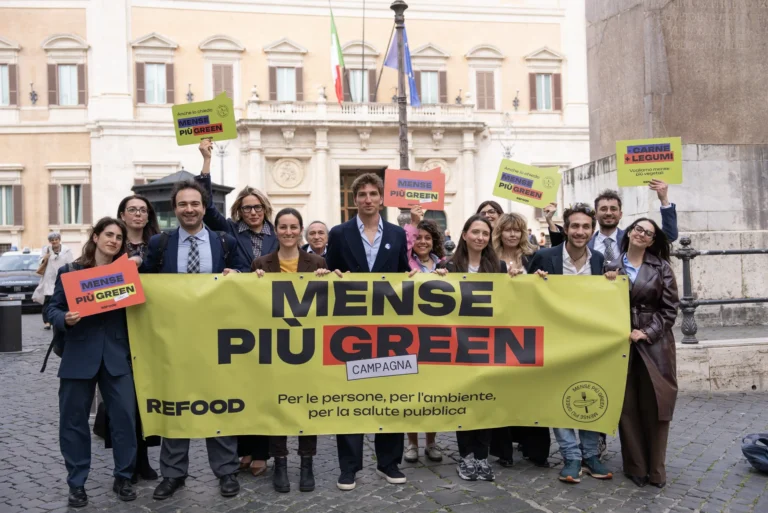
We at REFOOD are committed to providing “science-based” information, and for this reason we always pay close attention to press reviews and statements by nutrition experts in the media.
Not infrequently, even today, it is common to hear “experts” in nutrition demonise plant-based diets, or worse still, to find in canteens — including hospital ones — menus in which the proportion of plant-based food is almost negligible compared to food of animal origin.
No less serious is the attitude of institutions that emphasise the importance of consuming animal-origin products while minimising the importance of plant-origin ones, without there being any scientific basis for this disparity of treatment.
We therefore expect that, following the revision of the LARN and the large body of supporting scientific studies, alarmist coverage of plant-based diets will no longer find any place anywhere, and that institutions and the scientific community will finally adhere solely to the scientific evidence.