Very often when talking about plant-based diets there are many doubts and even fears driven by a lack of knowledge, as well as confusion generated by contradictory messages conveyed by the media and also by some doctors.
However, more and more scientific societies, in addition to the Scientific Society for Vegetarian Nutrition, are affirming the importance of plant-based nutrition. For example, in June the National Congress of the Italian Society of Human Nutrition (SINU) was held, during which the fifth revision of the LARN — the Reference Intake Levels of Nutrients and Energy for the Italian population — was presented.
This revision, which involved 150 experts divided into working groups, is based on data collected from five major surveys. Among these, the Moli-Sani project stands out, having studied approximately 25,000 residents of the Molise region to understand the genetic and environmental factors underlying cardiovascular diseases, cancers, and neurodegenerative conditions. Another significant study is the INHES (Italian Nutrition & Health Survey), which involved 13,000 citizens aged 6 and over through telephone interviews, with the aim of analyzing dietary habits and identifying new trends. These are joined by the OEC/HES, a survey by the Cardiovascular Epidemiological Observatory that assesses the health status of the Italian population.
The revision of the LARN was also based on the IV SCAI, a study conducted by the CREA Food and Nutrition Research Centre, part of the EU-Menu programme, which collected data on the dietary consumption of Italians following the methodologies recommended by EFSA (the European Food Safety Authority). This study provides data useful for assessing not only energy and nutrients, but also exposure to chemical substances and the environmental impact of diets, thus supporting the development of food policies and guidelines for the prevention of chronic diseases.
One of the main new developments to emerge is the shift toward a diet based more on plant foods. As highlighted by SINU in their press release: «This revision marks a true cultural evolution, placing emphasis on the inclusion of plant proteins over animal ones, in light of new evidence on mortality and the sustainability of food production».
During the same period, the German Nutrition Society (DGE) also updated its position on the vegan diet, recognizing it as a healthy choice for the healthy adult population. This represents a considerable change compared to the past, including with regard to groups such as children, young people, breastfeeding women, and the elderly. In the past, the DGE did not recommend a fully plant-based diet for these groups, whereas now it no longer rules it out a priori. The DGE experts also acknowledge that a vegan diet is highly respectful of the environment and surpasses meat-rich diets in terms of environmental impact and animal welfare.
These updates from the leading scientific societies signal an important shift: the criticisms directed at plant-based diets, often spread by traditional media, no longer have a scientific basis.
Dr. Luciana Baroni, founder of the Scientific Society for Vegetarian Nutrition (SSNV), who has been promoting plant-based nutrition for years as the healthiest and most sustainable choice, commented on SINU’s recent openness toward plant-based nutrition in an interview with us:
«In reality, SINU has been open to plant-based nutrition for about ten years now, when a working group on vegetarian nutrition was established, of which I was a member. This group produced two position papers (which you can find here and here) that have helped broaden the scientific basis attributing a key role to plant-based nutrition in maintaining health. Since this evidence is irrefutable, it is time for the entire scientific community to acknowledge it and act accordingly. SINU is moving in this direction».
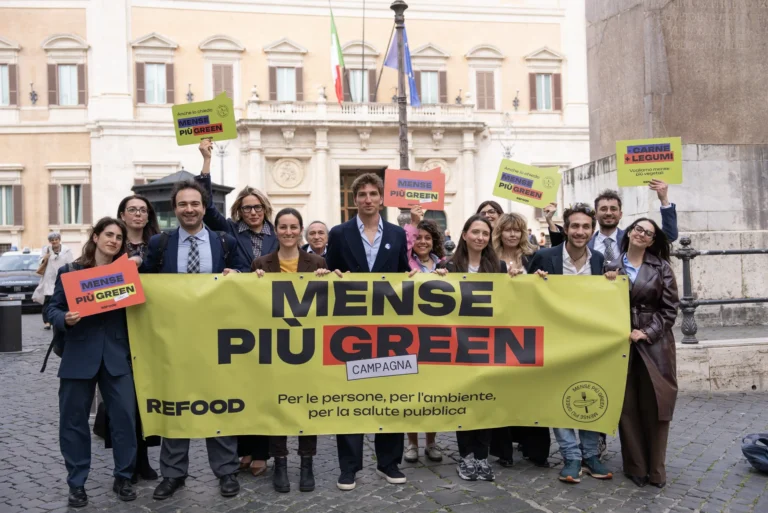
With the REFOOD project, we place at the centre the importance of information grounded in solid scientific evidence, and we carefully follow the statements of nutrition experts in the media. However, it is still common to hear some of them demonize plant-based diets, or worse, to observe that in canteens — including hospital ones — plant-based food represents a minimal share compared to food of animal origin.
An equally serious problem is the attitude of institutions, which often promote the consumption of animal products while neglecting the importance of plant-based ones — frequently demonizing them — with no real scientific support to justify such an imbalance.
At REFOOD, we are working to ensure that, thanks to the wealth of scientific evidence available, misinformation about plant-based nutrition finds less and less room, and that institutions and the entire scientific community finally begin to rely exclusively on concrete, up-to-date scientific data.