How we got to this point
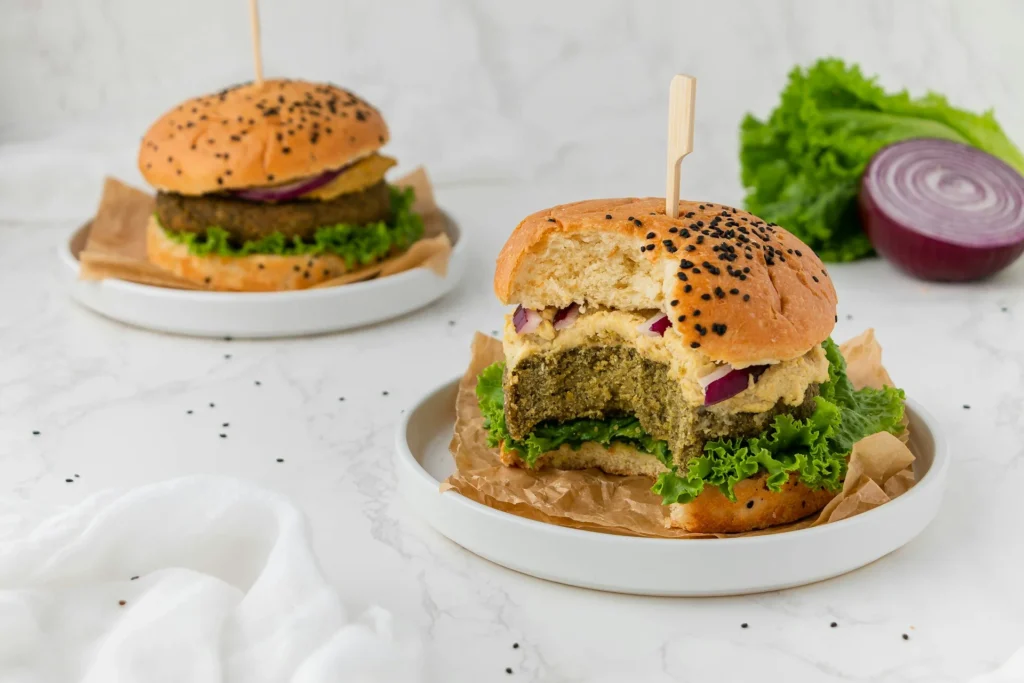
In 2020, the European Parliament rejected the attempt driven by the agribusiness lobby to ban terms such as “burger” or “sausage” for plant-based products, recognising that European consumers are perfectly able to tell a beef burger from a soy one.
Meanwhile, France had passed a particularly restrictive law, which was then effectively gutted by the Court of Justice of the EU in October last year, when it established the legal principle that Member States may not prohibit the use of terms commonly associated with animal products, provided that the plant-based nature of the product is clearly indicated.
It seemed that this ruling had laid the matter to rest, yet in the second half of 2025 the debate reopened, and the plant-based sector now faces a new legislative threat that risks imposing a linguistic gag on sustainable innovation.
The European Commission has in fact embraced the position of Italy, France and other Member States seeking to preserve their traditional production sectors and shield them from the advance of alternative products, presenting last July a legislative proposal to restrict the use of 29 “traditional” terms (such as chicken, bacon and steak).
What has happened in recent months
In examining the proposal, the European Parliament approved an even stricter amendment, which aims to scrap even the most common designations such as “burger” and “sausage” associated with plant-based products, pushed by rapporteur Céline Imart, a livestock farmer and member of the Committee on Agriculture and Rural Development. The current European Parliament has in fact a more right-leaning composition than its predecessor and is more receptive to pressure from the agribusiness lobbies.
What makes the current situation in Brussels especially chaotic is the presence of two different legislative tracks running in parallel, with different rules and timelines.
The European Commission’s proposal falls within the periodic review of the Common Market Organisation (CMO), which is part of the Common Agricultural Policy (CAP). The proposal would ban the use of 29 specific terms such as “chicken”, “bacon”, “breast”, “wing” and “thigh”. If approved, this measure would probably enter into force in 2028.
In parallel, MEP Céline Imart proposed a “targeted” review of the CMO aimed at strengthening protection for livestock farmers. The proposal, approved by the European Parliament, sets out far stricter restrictions, seeking to ban any term linked to animal species, cuts of meat or even shapes associated with conventional products. It would also include terms such as “steak”, “escalope”, “hamburger”, “burger” and “sausage”. The Imart plan would also prohibit the use of meat-evocative names for cultivated meat, which is not yet on the market in Europe.
The European Parliament voted in favour of this more restrictive proposal on 8 October (355 votes to 247).

The deadlock in the negotiations (trilogues)
Despite the push from Parliament, the front of Member States remains deeply divided, with Germany and Denmark at the forefront in blocking the ban. The German Agriculture Minister, Cem Özdemir, has repeatedly expressed scepticism towards restrictions he considers “pointless and burdensome”, stressing that the priority should be cutting red tape and supporting a food system that fosters consumer freedom of choice. The proposal also drew strong protests from large retailers, given that giants such as LIDL and ALDI are betting heavily on the plant-based sector.
The Danish Agriculture Minister and rotating president of the EU Council, Jacob Jensen, took the same line, arguing that imposing such restrictions would be an obstacle to the green transition. It is worth noting that Denmark is a particularly strong believer in the transition towards a more sustainable food system, having invested through a national action plan to support the plant-based sector.
A decisive meeting
On 10 December 2025, all eyes were on Brussels for the so-called “Trilogue”, the decisive meeting between the European Commission, Parliament and Council to negotiate the final text of the reform of the Common Market Organisation (CMO), into which the proposal to add the new banned labelling terms was being folded.
The outcome? A stalemate. No agreement was reached on the final text, since Council and Parliament failed to find a common position on restrictions to plant-based labels. To complete the procedure needed to produce new European laws, a Parliament vote alone (where the representatives elected by citizens sit) is not enough: a common position must also be reached with the Council, which represents the Member States.
The good news is that, at least for now, no ban has yet been definitively approved. The mobilisation of public opinion and media pressure played a crucial role in blocking an agreement that had seemed a foregone conclusion, helping the Danish presidency hold a critical line against the ban.
The bad news is that the negotiations have not been cancelled, merely postponed. They will resume in January 2026, during the Cypriot presidency’s six-month term, with the political goal of closing the matter by spring.
It’s not just a question of words
The economic and practical consequences of a ban would be severe. If these rules were to pass, the first to suffer harm would obviously be the companies in the sector (many of them start-ups), which would be forced to change their packaging and overhaul their branding and marketing strategies. A costly exercise that would dampen investment and slow the momentum of a sector that has kept growing at a brisk pace over the years.
Supporters of the ban claim they want to prevent consumers from getting confused and buying, say, plant-based sausages instead of meat ones. But the data say the opposite: according to BEUC (the European Consumer Organisation), 80% of people have no problem with current labels, not least because plant-based products are by now displayed on separate shelves or in separate sections, minimising any possible risk of confusion.
What is more, many MEPs – including the Italian Dario Nardella, former mayor of Florence – have stated that they voted in favour to safeguard local “excellences”, such as the Florentine steak. Consumer protection is therefore nothing more than a smokescreen, a convenient justification for this intrusion of politics into consumer choices, which are increasingly pointing in the plant-based direction.
The real confusion would arise if, tomorrow, looking for a veggie burger, you were forced to hunt for “plant-based discs” or “pea-protein tubes”. Such a bizarre relabelling could indeed put off less informed consumers. And perhaps that is exactly what the meat industry is aiming for, hoping in this way to regain ground, or at least to slow the “green revolution” that is gaining momentum.
Italy’s role
Italy is playing a “trailblazer” role in this restrictive trend, albeit with controversial results.
The Italian government had already passed a law to ban meat-sounding names, but to date it is unenforceable, as it was not correctly notified to the European Commission through the TRIS procedure.
More recently, Italy notified Brussels of a draft decree introducing heavy fines (from 4,000 to 32,000 euros) for anyone using terms such as “milk”, “butter” or “cheese” for plant-based products. This decree introduces the legally ambiguous term “evocation”, which could affect not only names but also shape, colour or packaging (such as “tubs” or descriptions like “creamy”).
What we at REFOOD are doing
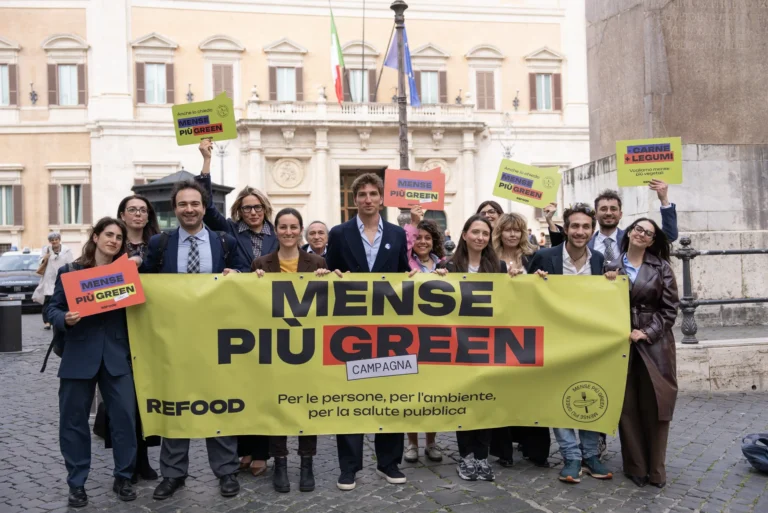
We at REFOOD are on the front line of this crucial battle for the future of sustainable food, as members of RIPA – the Italian Network for Alternative Proteins, which we helped bring into being.
In recent weeks, together with our other European partner organisations, we have been lobbying European and national institutions, with the aim of ensuring that legislation does not hinder innovation but instead actively supports the transition towards more ethical and sustainable food systems.
The situation is still open, because some Member States are openly opposed to this crackdown. Emblematic in this regard is the statement by Minister Jacob Jensen:
“The European Council was unable to reach an agreement with the European Parliament today on the adjustment of the common organisation of agricultural markets. For us it was important to keep unnecessary and burdensome rules to a minimum and, from now on, we must take the recommendations of the Draghi Report more seriously. This applies both to the rules on written contracts and to the use of meat denominations.”
We will keep you informed of developments. The game is still open, and everyone’s contribution – from media pressure to support for the companies in the sector – remains essential.