The Common Agricultural Policy (CAP) is one of the European Union’s most important instruments for steering the agricultural sector towards economic, social and environmental sustainability goals. The CAP can be defined as a set of policies and measures adopted by the European Union to support agriculture and rural areas: its main purpose is to ensure that farmers can produce food in a sustainable way, offering economic support to improve the quality of life in rural areas, protect the environment and promote development.
In practice, the CAP provides concrete assistance to farmers through subsidies (financial aid) and incentives, so that they can meet the challenges related to agricultural production, such as international competition, climate change and price competitiveness.
The CAP aims to improve the quality of agricultural production and to encourage sustainable practices: in this context, crop rotation and the role of legume crops are key elements, explicitly promoted through regulatory mechanisms and economic incentives provided for in Community regulations.
The CAP: regulatory framework and eco-schemes
With the CAP reform for the period 2023–2027, the European Union introduced significant regulatory innovations, including the obligation for Member States to include in their National Strategic Plans measures that promote environmental sustainability. Eco-schemes, provided for by Regulation (EU) 2021/2115 on CAP strategic plans, are key tools for incentivising sustainable agricultural practices. They consist of a series of measures that farmers can choose to adopt in exchange for economic support from the European Union and may cover a range of actions. Among these, crop rotation is identified as one of the practices necessary for maintaining soil fertility and reducing the environmental impact of agricultural activities.
Member States, pursuant to Article 31 of the regulation, are called upon to implement measures that promote environmentally friendly farming systems, such as the adoption of legume crops, which offer a twofold advantage: they improve soil health and reduce dependence on chemical fertilisers.
Crop rotation in European legislation
Crop rotation is regulated within the CAP’s normative framework as an agronomic practice necessary for compliance with environmental conditionality requirements. Regulation (EU) 2021/2116 establishes that farmers must comply with a set of mandatory practices in order to access direct payments, including crop diversification and rotation, as provided for under the Good Agricultural and Environmental Condition (GAEC) standards. In particular, GAEC standard 7 provides for:
- Crop diversification: Farmers must cultivate at least three different species on plots larger than 10 hectares.
- Mandatory rotation: Annual crop succession is required to improve soil structure and fertility, reduce erosion and limit the use of chemical inputs.
Legumes and the CAP: incentives and regulatory benefits
Legume crops are explicitly promoted in CAP regulations as crops that are beneficial for the environment and for the climate. These plants play a crucial role thanks to their ability to fix atmospheric nitrogen, thereby reducing the need for nitrogen fertilisers. This aspect is recognised by European legislation which, through eco-schemes, offers economic incentives for the introduction of legumes into crop rotations.
Pursuant to Article 31 of Regulation (EU) 2021/2115, payments relating to eco-schemes may be granted for practices such as:
- Increasing the areas cultivated with legumes.
- The cultivation of catch or cover legumes, which contribute to soil protection.
- The adoption of integrated agroecological systems that include a significant proportion of legumes.
These incentives vary according to the areas cultivated and the resources available, and aim to ensure an ecological transition in agriculture by reducing the use of chemical inputs and increasing the resilience of farming systems.
Integrating legumes into agricultural systems: legal opportunities
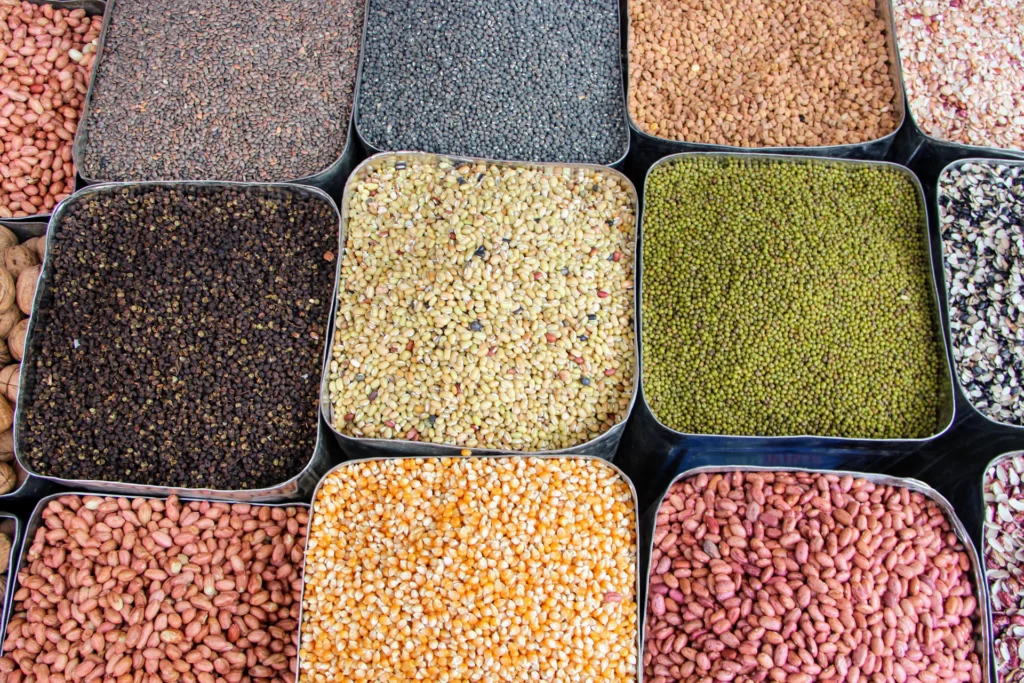
Legume crops, such as beans, chickpeas, lentils and peas, can benefit from additional support under the CAP. In addition to eco-schemes, legumes fall within the agri-environment-climate measures provided for under Rural Development Programmes (RDPs), as established by Regulation (EU) 2021/2115. These measures include:
- Compensatory payments: For farmers who adopt sustainable practices, such as crop succession with legumes.
- Biodiversity contributions: Legumes promote increased biodiversity, a key objective of the EU “Farm to Fork” strategy.
- Support for protein crops: Through specific incentives for the production of legumes intended for human and animal consumption, reducing dependence on soya imports.
Future prospects and Member State obligations
In the context of global environmental challenges, such as climate change and food security, the CAP requires Member States to pursue sustainability objectives through concrete regulatory tools. The adoption of legumes and mandatory crop rotation are central elements of the National Strategic Plans, which must comply with the objectives of the European Green Deal and the Biodiversity Strategy for 2030.
Member States are obliged to monitor and evaluate the effectiveness of the measures adopted, with particular attention to the environmental and socioeconomic impact of the funded agricultural practices. The European Commission also has the task of verifying that the measures set out in the Strategic Plans meet regulatory requirements and contribute to the Union’s climate and ecological objectives.
Conclusions
The CAP, through a solid regulatory framework and targeted incentives, promotes the adoption of sustainable agricultural practices such as crop rotation and the use of legumes. These practices not only respond to legislative obligations, but offer farmers concrete tools to improve soil fertility, reduce production costs and contribute to the ecological transition.
Looking ahead, the success of the CAP will depend on the ability of Member States to effectively integrate these measures into their National Strategic Plans, ensuring that European agriculture becomes increasingly resilient and sustainable. In this sense, legumes represent not merely an opportunity, but a central element in combining innovation, regulatory compliance and environmental protection.