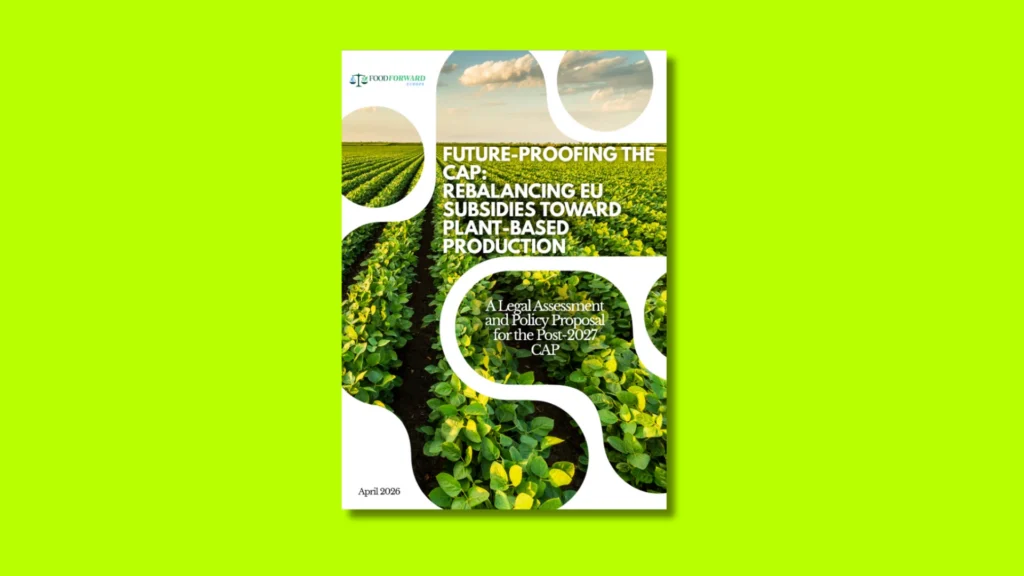
A new report by our partner Food Forward Europe (FFE), to which REFOOD also contributed, proposes reallocating at least 20% of Common Agricultural Policy (CAP) subsidies currently absorbed by animal farming and feed towards plant proteins destined for direct human consumption. A concrete, fiscally neutral and politically realistic request, aimed at making the European food system more resilient, healthier and less dependent on imports. The document was published just as discussions begin in the European Parliament ahead of the post-2027 CAP reform.
An unbalanced CAP: over 80% of funds end up in animal farming
With a budget of around 378 billion euros for the 2021–2027 period, the CAP is one of the European Union’s largest public spending programmes. Yet its architecture is heavily skewed: over 80% of subsidies end up, directly or indirectly, with livestock farming. About 38% directly supports animal farms, while a further 44% finances the production of feed and other inputs destined for animals.
Crops grown for people — legumes, protein crops, plant protein sources — receive a very limited share instead.
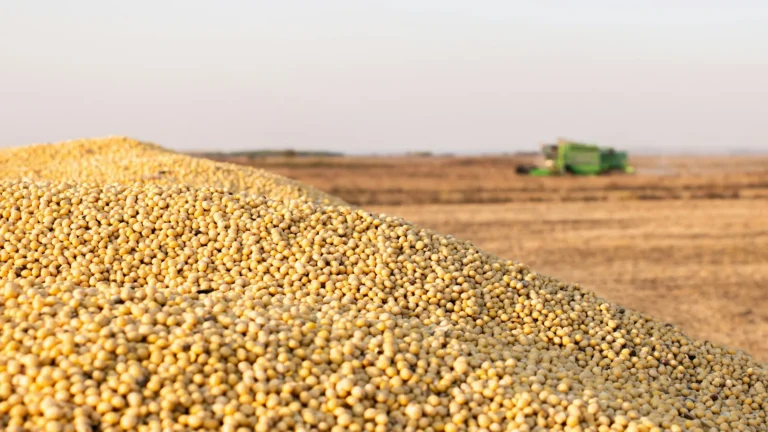
The result is a model that leaves Europe heavily dependent on the outside world: 94% of the soy used in the EU is imported, often from areas affected by deforestation; two thirds of European cereals end up in animal feed; 70% of agricultural land is in some way tied to livestock farming.
REFOOD’s contribution to the report
The report is the result of a joint effort by European civil-society organisations, including us at REFOOD.
«Ours is a proposal that aims to correct a structural imbalance, allocating a significant budget for the first time to the plant proteins that end up on people’s plates, not in barns. It is the only viable path to making Europe self-sufficient in food production. We believe it is reasonable and strategic for policymakers to support farmers who want to start converting to plant crop production».
— Alessandro Ricciuti, President of REFOOD and Head of EU Strategy at Food Forward Europe
60 billion for the protein transition, with no new public spending
In concrete terms, the 20% reallocation proposed by FFE corresponds to around 60 billion euros over seven years, or 8.5 billion per year. A significant figure, but a sustainable one: this is not new spending, but a matter of shifting public resources already allocated towards goals more consistent with the environmental, health and geopolitical challenges Europe faces.
The report proposes a gradual transition:
- at least 5% reallocated by 2030;
- at least 10% by 2032;
- 20% by the end of the next programming period.
Alongside this cornerstone measure are six complementary actions, from creating a dedicated budget line for plant proteins for human consumption to supporting farms that want to diversify their production and reduce dependence on imported soy.
A common-sense proposal
The proposal arrives in a context where consumer demand is already changing: in Europe, sales of plant-based foods grew by 49% between 2018 and 2020, and several Member States have already adopted national strategies on plant proteins.
The benefits are just as clear: greater protein autonomy for the Union, less dependence on international markets, lower emissions (livestock farming today accounts for around 65% of EU agricultural emissions, up to 81–86% when feed, processing and transport are included), diversification for farms and new economic opportunities for those who want to change their production model.
The report insists on a crucial point: the reform must concern proteins destined directly for people, not those that, although plant-based, continue to end up in animal feed. A fundamental distinction, to prevent the transition from remaining words on paper.
Food Forward Europe’s public webinar on 19 May
To present the report and gather input from members of parliament, practitioners and citizens, FFE organised a webinar open to the public on Tuesday 19 May 2026. Speakers include Alessandro Ricciuti, President of REFOOD and Head of EU Strategy at Food Forward Europe.
Registration is free at this link.
The full report and the executive summary are available at foodforwardeurope.org.
We are not stopping here
The post-2027 CAP reform is being written in Brussels in these very weeks. For us at REFOOD it is an opportunity Europe cannot afford to miss: the next Common Agricultural Policy can keep funding a system that produces vulnerability — climatic, health-related, geopolitical — or start building a more diversified, more sovereign and more sustainable agriculture, capable of facing the challenges of the coming decades.
In the coming months we will continue to follow the European negotiations closely and bring the voice of Italian citizens into that debate. Sign up for the 19 May webinar to learn more, and read the report to explore the analysis and proposals in detail.