A long-awaited plan
On 7 July 2026 the European Commission presented the Protein Plan, officially the “Action Plan for the resilience, strategic autonomy and sustainability of the EU protein system,” published together with the first European Livestock Strategy. Both initiatives, announced in the Vision for Agriculture and Food, come at the end of a long process of consultations involving institutions, agricultural supply chains and civil society.
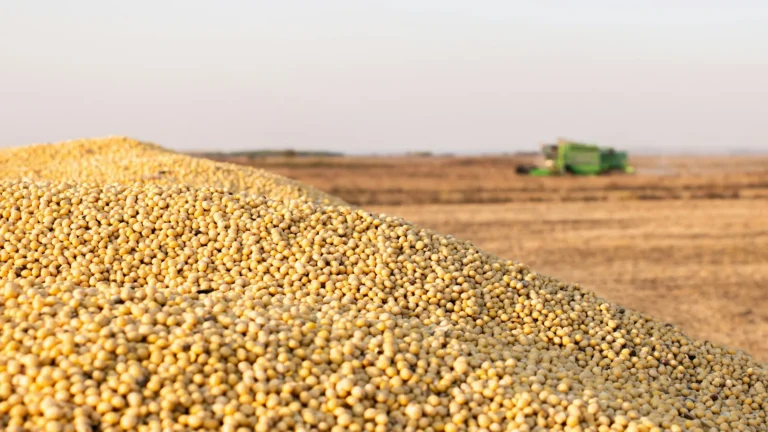
The starting point is a long-known structural fact: Europe does not produce enough plant protein. The European livestock sector consumes around 74 million tonnes of protein every year for animal feed, and about a quarter of it is imported. In the 2024/25 marketing year alone, the EU imported approximately 13.4 million tonnes of crude soy protein, largely from Brazil, the United States and Argentina — a dependency that exposes the European agri-food system to geopolitical shocks, price volatility and imported deforestation.
The question many were asking on the eve of the plan’s publication was: would the Commission address this dependency by rethinking the system — that is, by shifting part of the protein from trough to table — or would it simply “grow at home” the feed it currently imports? The answer, for most organisations working on protein transition, is the latter.
What the plan includes
The Protein Plan is built around three pillars — production, innovation and demand — and defers much of its implementation to future instruments: the post-2027 CAP, the revision of the single CMO, the Biotech Act II, the next Multiannual Financial Framework and EU research programmes.
The only quantified and binding target concerns feed: raising the share of protein from oilseeds and protein crops grown in the EU and used as feed from 25.8% in 2025 to 35% by 2035. There is no equivalent target for plant proteins intended for human consumption, nor any goal for rebalancing animal and plant proteins in production or consumption.
On the demand side, the plan does contain some measures that civil society organisations had been calling for over the years, although almost all of them are voluntary or left to Member States:
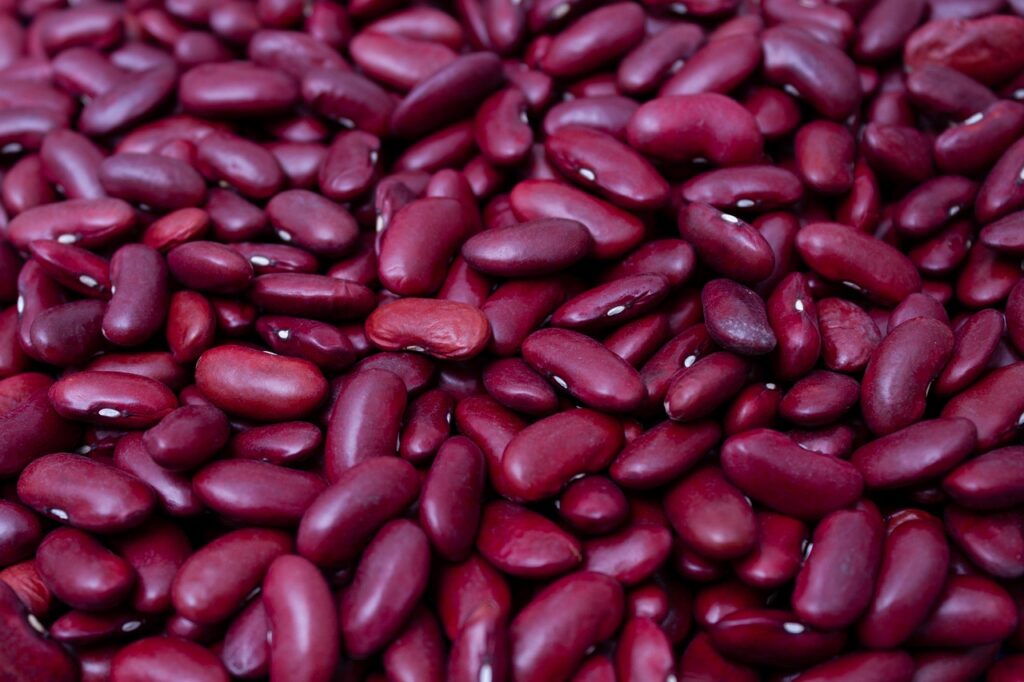
- the promotion of legumes in the EU School Scheme (which currently distributes milk, fruit and vegetables), with educational actions to familiarise children with the taste and nutritional benefits of legumes;
- “best value” criteria in public procurement for canteens and collective catering, rewarding quality and sustainability rather than the lowest price alone — an approach that favours local plant-based products, legumes above all;
- the possibility for Member States to apply reduced VAT on healthy and sustainable products, including plant proteins, and to use fiscal policy to make “resilient” food more accessible;
- the inclusion of legumes and pulses in European agri-food promotion campaigns, including the future “Buy European” campaign;
- explicit recognition of the role of food environments: prices, availability, public catering, labelling and information as determinants of food choices.
The plan also acknowledges that plant-based food and beverage products have “the greatest market potential” among alternative proteins, cites the Danish action plan for plant-based foods as good practice, and establishes annual “protein dialogues” with Member States to monitor implementation.
The core issue: a plan for feed, not for diets
Despite these openings, the overall structure of the document points in a clear direction. The analysis by Eurogroup for Animals, the European federation of animal protection organisations — which had already published a position paper on protein diversification back in February — is unambiguous: the plan “focuses heavily on feed resilience, at the expense of plant and alternative proteins for human consumption.” Protein diversification is consistently framed in terms of feed and food together, and the diversification narrative has effectively been “hijacked from the food sector by the feed sector.”
Several aspects of the analysis deserve particular attention.
Reducing consumption of animal protein is not addressed. The plan never mentions Europeans’ overconsumption of protein — particularly animal protein — relative to EFSA nutritional recommendations, nor the possibility of shifting diets toward lower animal-product content. Whenever a reduction in European production is raised, it is only as a “false alternative”: reducing EU production, the Commission argues, would simply mean replacing it with more impactful imports. An efficiency argument that, as Eurogroup for Animals observes, risks displacing any consideration of animal welfare and the environment.
Animal welfare is left out of the picture. In the Protein Plan, animal welfare appears only in relation to feeding strategies and feed additives, never as a policy objective in its own right. The policy coherence called for between CAP funds, trade policy and EU goals concerns self-sufficiency and climate neutrality, not animal welfare objectives.
Insects and fermentation confined to feed. Precision fermentation and biomass proteins are treated almost exclusively as innovations for feed, while insects are cited as a “circular solution” for animal nutrition, with possible investment in the use of by-products and former foodstuffs. Cultivated meat and novel foods are not even mentioned, and the language on the “social considerations” of new foods — calling for a “strengthened and inclusive dialogue” — could translate into further obstacles for alternative proteins.
Naming rules: “meat-related terms” are coming. The plan anticipates that, alongside the existing rules on dairy denominations, restrictions on meat-related terms will apply in future — a signal that worries Europe’s plant-based sector, still recovering from the debate over “veggie burgers” and similar terms.
What the science says (and what the plan ignores)
The Protein Plan’s silence on the “table” side weighs even more heavily when set against the available scientific evidence.
Europeans already consume too much protein, especially animal protein. Today, 64% of protein consumed in the EU is of animal origin, while legumes and pulses cover just 2% of protein intake. Average adult protein intake in European countries far exceeds the reference requirement set by EFSA at 0.83 g per kg of body weight per day: Europe’s problem is not the quantity of protein, but its origin. This is precisely the point the plan avoids addressing.
The climate impact of animal protein is well documented. According to the study by Xu et al. published in Nature Food, the food system generates about a third of global greenhouse gas emissions, and animal-based foods account for 57% of these, compared with 29% for plant-based foods. The analysis by Poore and Nemecek published in Science — the largest ever conducted on the environmental footprint of food — shows that meat and animal products occupy around 83% of the world’s agricultural land while providing only 18% of calories and 37% of protein. And as noted in research from the Ecologic Institute cited by Fern, only around a quarter of livestock emissions can be cut through technical measures: the rest requires changes in diets and production volumes.
Shifting toward plant protein also benefits health. The EAT-Lancet Commission has estimated that global adoption of more plant-rich diets — the “planetary health diet” — could prevent around 11 million premature deaths a year, and the literature links plant-predominant dietary patterns to better cardiovascular and metabolic health. Legumes and pulses, as PAN International’s physicians point out, are “accessible, fibre-rich and nutrient-dense” protein sources — and they also fix nitrogen in the soil, reducing the need for synthetic fertilisers.
Taken together, this evidence makes it hard to justify a protein plan that sets a binding target for feed and none for diets.
The reactions: “too much trough, too little table”
European organisations across the plant-based and animal-welfare space have reacted with a surprisingly convergent assessment: acknowledgement of the plan’s political value, disappointment at the lack of concrete measures on food.
The European Vegetarian Union (EVU) called it a potentially historic but unfinished step. “The Protein Plan marks an important milestone, clearly signalling that plant proteins are central to the future European food system,” said Rafael Pinto, Senior Policy Manager at EVU, who added: “the plan still lacks concrete measures to address the EU’s protein imbalance.” EVU highlights an arithmetic paradox: the plan’s only target (35% feed self-sufficiency by 2035) could be met simply by increasing human consumption of plant protein, given the current imbalance in European diets. The call is twofold: consumption targets alongside production targets and, as the “logical next step,” a genuine European Action Plan for Plant-Based Foods, modelled on the Danish approach.
ProVeg International summed up the criticism with an effective phrase, picked up by the German press: “too much trough, too little plate” (zu viel Trog, kaum Teller). In the official press release, Lucia Hortelano, EU Senior Policy Manager at ProVeg, acknowledges that “Europe has clearly understood that protein resilience matters” and welcomes support for protein crops, carbon credits for legume-based systems, legumes in public procurement and schools, and the possible reduced VAT. But she points to the underlying asymmetry: the concrete, measurable target on feed is not matched by “comparable ambition for proteins grown directly for human consumption,” with food-related measures remaining “largely voluntary and left to national discretion.” The “natural next step,” according to ProVeg: a dedicated European plan for plant-based foods modelled on Denmark’s. The plan pushes for increased production but does too little to encourage people to eat more plant protein.
The Good Food Institute Europe points the finger at funding. According to Alex Holst, Head of EU Policy, the plan “lacks financial commitments to scale up plant proteins and fermentation, and proposals to support farmers” — a delay that could prove costly for Europe in its global competition with China on alternative proteins.
From Italy comes the voice of RIPA – Italian Alternative Protein Network, which brings together non-profits and businesses across the alternative protein supply chain. Its judgement is already in the title of its analysis: “Europe sees the potential, but lacks the courage for real investment.” RIPA welcomes the fact that the Commission finally recognises protein as a strategic issue and states in writing that plant-based food and beverages are “the segment with the greatest market potential,” but denounces the underlying contradiction: that potential is matched by no industrial policy, and the plan’s “cautious approach” remains focused on regulatory aspects, without tools to develop the plant protein supply chain for human food. The network recalls what is at stake, citing the Systemiq study: protein diversification could be worth up to €111 billion in added value per year for Europe by 2040, 414,000 skilled jobs, €128 billion in annual exports, and the freeing up of 21% of agricultural land. For Italy, RIPA calls for support for legumes, investment in research and industrial innovation, and a dedicated national fund for the entire plant protein supply chain.
Slow Food broadens the criticism to the underlying model: according to Secretary General Marta Messa, the package remains “firmly anchored to a model of competitiveness, productivity growth and technological optimisation, rather than a genuine transformation of food systems.” Intensive livestock farming — among the main drivers of feed dependency, biodiversity loss and water pollution — is never named in the documents. And farmer Jacopo Goracci warns: “feed autonomy is not food sovereignty” — the risk is reproducing the same vulnerabilities under different geographic conditions.
The forest NGO Fern sums it up in a clinical phrase: “the diagnosis is correct, but the cure is still missing.” The package correctly identifies the unhealthy dependence on Brazilian and US soy and the benefits of pastures and legumes, but relies on technological solutions and the CAP without dedicated funding — while research cited by Fern (Ecologic Institute) indicates that only around a quarter of livestock emissions can be reduced through technical measures: the rest requires changes in diets and volumes.
Even harsher is the assessment by the European Environmental Bureau of the twin Livestock Strategy: “the Commission seems determined to paint a rosy picture of an industry dominated by big agribusiness corporations, which pollute while cashing in,” said Isabel Paliotta, policy officer for sustainable food systems. The EEB also flags the package’s internal inconsistency: the Protein Plan acknowledges the value of plant-rich diets, while the livestock strategy revives industrial production and lends credibility to the “biogenic methane” narrative as an emission to be treated favourably.
The medical community has also spoken up. PAN International (Physicians Association for Nutrition), the international network of doctors and health professionals promoting evidence-based nutrition, welcomed the plan but reframed its perspective: protein diversification “is not just an agricultural or trade issue: it is a public health opportunity.” Starting from the figure of 64% animal protein in the European diet, PAN calls for “greater ambition on plant proteins for human consumption and food environments that make healthy, plant-rich choices more accessible across Europe.” In the analysis authored by Federica Amiconi, the organisation’s EU Public Affairs Officer, the core request is that health be treated as a “central objective” of protein diversification, not a side benefit — and that measures that are currently voluntary, such as taxation and procurement, become binding commitments at EU level.
On the opposite front, the plan was welcomed positively by the feed industry: the European federation FEFAC welcomed both the Protein Plan and the Livestock Strategy — a reaction that, read alongside civil society’s criticisms, says a lot about who the plan really reassures.
The positive points (which it would be a mistake to ignore)
A balanced analysis must recognise that the Protein Plan contains important seeds, some of which would have been unthinkable just a few years ago.
For the first time, a Commission strategic document acknowledges that diets with a high share of plant-based foods contribute to health, the environment and climate, and that food environments — not just individual choices — determine what we eat. Legumes, although accounting for just 2% of European protein intake, are highlighted as an essential component of a sustainable diet. The Danish action plan for plant-based foods is cited as a model for Member States, and tools such as the School Scheme, “best value” procurement, reduced VAT and legume promotion correspond exactly to what has been requested over the years by the broad coalition of civil society organisations — from ProVeg to EVU, from EEB to Eurogroup for Animals — calling for an EU Action Plan for Plant-Based Foods.
The recognition of economic opportunities for farmers is also significant: increased sales of plant protein are presented as an income opportunity for farms and rural communities, with new value chains. And the recognition of extensive livestock systems — less dependent on imported feed — opens up space for more territorially rooted farming, even though animal welfare is never mentioned among its benefits.
The problem, organisations agree, is not what the plan says: it is what the plan commits to. All the food-side measures are voluntary, without dedicated funding, without targets and without deadlines. The only measurable commitment concerns feed.
What happens now
The Protein Plan is a political communication: its substance will be decided in the legislative files it refers to. The fronts to watch in the coming months are the post-2027 CAP (which will include origin standards for protein crops and support for legumes), the revision of the single CMO and the rules on denominations and marketing standards (including the feared “meat-related terms”), the Biotech Act II on advanced fermentation, the revision of the School Scheme, the new EU multiannual budget, and the annual “protein dialogues” with Member States. Denmark — whose national plan for plant-based foods is cited by the Protein Plan itself as good practice, and which put the issue on the agenda during its Council presidency — remains the reference point for those calling for food, not just feed, to be placed at the centre of Europe’s protein strategy.
For those working on the protein transition, the assessment is clear: the Protein Plan legitimises plant-based food in the EU’s strategic vocabulary for the first time, but chooses not to choose. It acknowledges that diets need to change, without giving itself the tools to change them. The window to correct course — consumption targets, dedicated funding, a European plan for plant-based foods — is open: it’s called implementation, and it starts now.