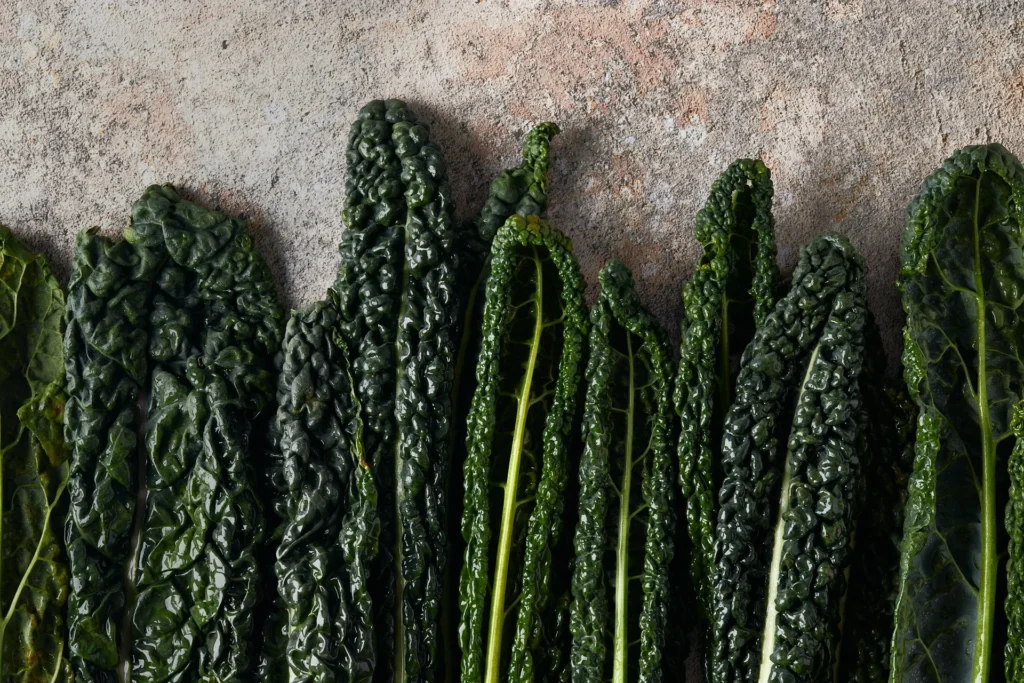
Cruciferous vegetables, or brassicas, make up a large and varied family of vegetables that includes broccoli, cauliflower, cabbage, savoy cabbage, black kale, red cabbage, curly kale, Brussels sprouts, turnip tops, mustard, and turnip.
These are vegetables of which the flower and/or leaf is typically used, and they are particularly rich sources of fibre, folic acid, riboflavin, vitamin A (beta-carotene), vitamin C, vitamin E and vitamin K, potassium, iron and magnesium, as well as phytochemicals.
Cruciferous vegetables are also included among the “calcium-rich foods” of the PiattoVeg, as they possess a high amount of highly bioavailable calcium.
Their consumption is associated with a reduced risk of cancer in many organs and tissues (breast, endometrium, cervix, prostate, lung, colon, liver).
These effects have been attributed in particular to the content of folic acid and phytocompounds.
The main phytocompounds in cruciferous vegetables that are active in cancer prevention are glucosinolates, organosulfur compounds whose hydrolysis (carried out by plant myrosinases) produces isothiocyanates (including sulforaphane), indoles (such as indole-3-carbinol – I3C) and nitriles (cramben).
These compounds are thought to often act synergistically, thereby mutually enhancing one another across the various mechanisms of action that underlie this protective effect.
Other phytocompounds, on the other hand, possess antioxidant properties (polyphenols, other indoles besides I3C, carotenoids, S-methyl cysteine sulphoxide), and act by neutralising free radicals that are capable of altering the structure of DNA by inducing mutations involved not only in the development of tumours but also in that of many degenerative diseases.
These diseases include cardiovascular, cerebrovascular and neurodegenerative diseases (Parkinson’s disease, Dementias). These substances likely act in synergy with vitamins E, C, K and minerals such as iron, zinc and selenium.
As with all vegetables, the content of certain substances is reduced by cooking, while that of others (most notably glucosinolates) is increased.
It is therefore important to consume these vegetables both raw and lightly cooked. As is well known, the best cooking method for vegetables is steaming, which preserves the nutrient content of the food. Overcooking destroys nutrients, and in the case of cruciferous vegetables produces a strong smell of sulphur.
Cruciferous vegetables are therefore a precious food, extremely versatile as they can be used both in first and main courses, and they possess protective effects that go beyond simply providing good sources of calcium in the diet.