
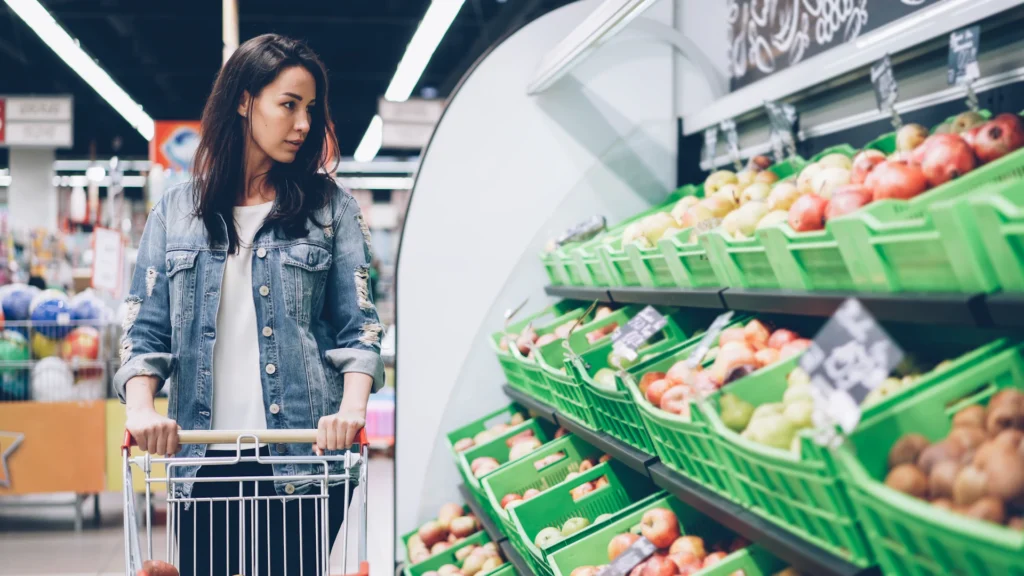
According to the report “The illusion of choice – Why someone already decided what you will eat for lunch“, produced by the Put Change on the Menu coalition, which includes organisations such as Eurogroup for Animals, European Public Health Alliance and European Consumer Organisation, our food choices are often influenced by external factors that leave us with limited decision-making power.
Who influences food environments?
But what are food environments? The United Nations High Level Panel of Experts on Food Security and Nutrition, in its report “Nutrition and food systems“, defines food environments as «the physical, economic, political and socio-cultural context in which consumers interact with the food system to make decisions regarding the purchase, preparation and consumption of food».
These environments shape our everyday food choices.
Marketing, advertising, promotional offers, the availability and price of food, as well as its placement in supermarkets, are all elements that can manipulate our behaviour. Unfortunately, in many cases, these influences push us towards unhealthy and unsustainable foods, often presented as the most accessible and affordable options.
The Put Change on the Menu report
The report “The illusion of choice” highlights how purchasing and consumption decisions are largely influenced by the food industry, rather than being a free and autonomous choice made by consumers.
The Put Change on the Menu coalition urges policymakers to foster a shift that makes healthy diets easier to adopt, with a greater intake of plant-based foods and fewer animal-derived products, while at the same time promoting animal welfare.
This publication coincides with a new scientific review released by SAPEA (Science Advice for Policy by European Academies), a consortium of independent scientists that advises the European Commission. The report confirms that food choices are strongly influenced by external factors, rather than being entirely free and informed.
Being aware of one’s own choices
Food choices are fundamental in shaping the future we want; every purchase is, in fact, a kind of “vote” that consumers cast with their shopping basket, contributing to the shift towards greater sustainability and greater respect for animals. However, consumers need to be guided along this path. The primary responsibility falls on public decision-makers, who must take concrete steps in the coming years to correct market distortions. This could include tax incentives for more sustainable foods and taxes on products that generate negative environmental and social impacts.
Companies in the food sector also play a key role. With their power to influence consumers, they must take on social responsibility, committing to making healthy and sustainable foods more accessible. This includes eliminating marketing strategies that push consumers towards foods that are unhealthy, unsustainable and disrespectful of animal welfare.
The joint commitment of both public and private decision-makers is essential to create a fairer, healthier, more sustainable and more inclusive food system.