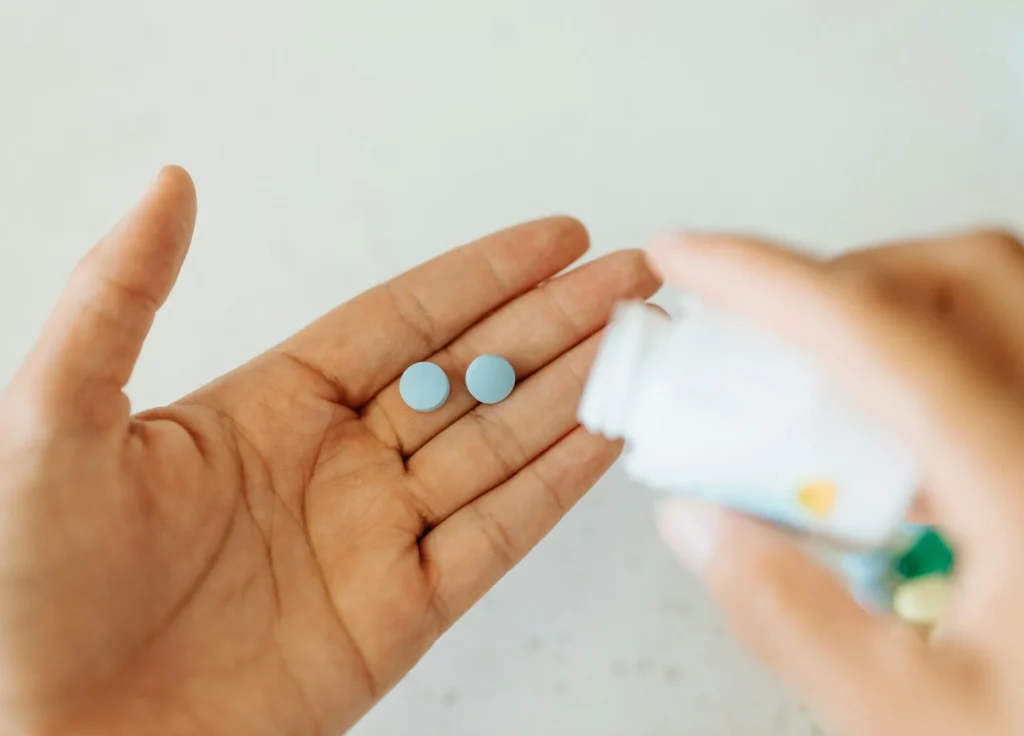
As a general rule, all vitamins (with the exception of vitamin D and vitamin K) are essential nutrients, meaning they are not produced by the body and must be obtained from an external source — that is, through diet, via food or supplements. It should be clarified here that supplements are defined by Legislative Decree of 21 May 2004, no. 169, implementing Directive 2002/46/EC on food supplements, as «food products, intended to supplement the common diet and which constitute a concentrated source of nutrients».
Therefore, we should not regard the intake of a supplement, when necessary, any differently from the intake of any ordinary food.
Supplements are indeed particularly useful when the diet does not provide adequate amounts of a specific nutrient: this is the case with vitamin D (which physiologically should be produced by the skin through the action of sunlight, but not at our latitudes), iron (whose very high requirements in certain physiological situations cannot be met by diet alone), and vitamin B12, about which I will provide further details in this article.
Vitamin B12 is a special vitamin, because it is found only in animal foods (which means that plant foods contain none of it — though to be precise, the vast majority of animal foods contain it largely because animals ingest it through supplements included in their feed). However, in order to meet the daily requirement, the recommended amounts (4 mcg in adults) would need to be consumed across multiple intakes, meaning animal foods would have to be eaten daily and at every meal. This conflicts with all the most recent Nutritional Guidelines, which encourage reducing the consumption of animal foods and favouring plant-based foods.
Furthermore, due to the peculiar mechanisms of absorption and distribution in tissues, the amounts ingested are not proportional to those absorbed: as intake increases, absorption decreases dramatically. If factors that interfere with absorption are also present — such as gastritis, use of antacids or metformin, or intestinal resections — absorption is reduced even further. A healthy gastric environment is in fact required, capable of producing the enzymes and hydrochloric acid that “detach” vitamin B12 from the food containing it, and capable of producing Intrinsic Factor, which transports the vitamin to the terminal ileum, where it is absorbed. Since binding to Intrinsic Factor is saturable (allowing the absorption of only 1.5–2.0 mcg), this explains why only small amounts of vitamin B12 are well absorbed. Alternatively, since the vitamin can be passively absorbed from the intestinal lumen, very large amounts are needed, as this process has an efficiency of just 1%; this also explains why the less frequent the intake of the vitamin, the higher the dose must be, since it should always be remembered that the percentage absorbed is not fixed, but varies with the dose.
Vitamin B12 deficiency manifests with haematological and neurological symptoms, and — in addition to individuals presenting the aforementioned factors that interfere with absorption — after the age of 50 many people are unable to absorb it efficiently.
This explains why vitamin B12 deficiency is now far more widespread in the omnivorous population than generally believed — as the market has clearly noticed (just think of the proliferation of advertising campaigns promoting supplementation).
Knowledge of vitamin B12 among healthcare professionals is, I would dare say, at the very least insufficient (above all, there is a lack of competence regarding recommended amounts). Moreover, laboratory reports are not helpful, since many still identify normal levels as above 180–200 pg/ml, and only a minority report a reference to the so-called “grey zone”, which can extend up to 450–550 pg/ml and which can cause harm because vitamin levels may still be insufficient for the functions it needs to perform — a zone that must be recognised before irreversible damage can develop.
Paradoxically, vegetarians (lacto-ovo and vegan) are aware of the problem, whereas the vast majority of the omnivorous population and their doctors are not. Unfortunately for them, consuming animal foods does not confer immunity. It is therefore important that awareness of vitamin B12 becomes common knowledge. If you have not already done so, ask your doctor to check:
- full blood count
- vitamin B12
- folates (which can confound the results relating to red blood cell volume)
- homocysteine (which is an indicator of vitamin store deficiency, and tends to increase when the vitamin is not functioning sufficiently)
I will close by noting that the initial symptoms of deficiency are at first vague but reversible, whereas advanced symptoms may be irreversible. Keep your blood B12 levels above 400–450 pg/ml, regardless of your diet, and remember that specific supplementation guidelines are available, drawn up by the experts of the Scientific Society for Vegetarian Nutrition – SSNV.
Finally, there is no benefit in using the expensive so-called “natural isoforms” (methyl- and adenosyl-cobalamin), because they are not used as such but are in any case broken down to cobalamin, from which the body then produces the isoform it needs.